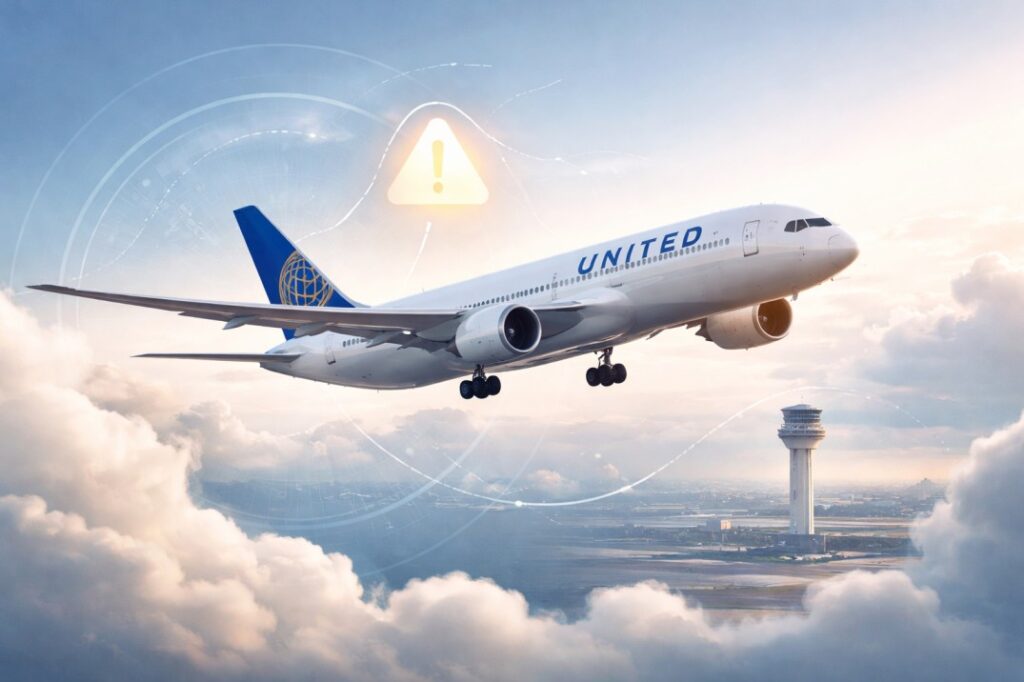
A transatlantic flight rarely makes news unless something dramatic happens. Yet the story of the United Airlines Flight UA770 Emergency Diversion became notable for a different reason. Nothing failed. No one was harmed. And still, the aircraft changed course and landed early.
The Boeing 787-9 Dreamliner was flying from Barcelona to Chicago when the pilots received a cockpit alert related to cabin conditions. Within minutes, they declared a general emergency and redirected the aircraft to London Heathrow. To passengers, it may have felt like an unexpected stop. To aviation professionals, it was a routine act of caution.
This incident shows how modern air travel is built on early decisions, careful monitoring, and strict procedures that begin long before danger appears.
What Happened in the Sky That Day
The aircraft was cruising at high altitude over the Atlantic when a warning appeared in the cockpit. The alert was linked to the cabin pressurization system, which keeps the air inside the aircraft safe to breathe. Even a small irregular reading in this system is treated with full attention.
The pilots responded by entering squawk 7700 into the transponder. This code signals a general emergency to air traffic control across all frequencies. Immediately, controllers gave the flight priority handling and prepared a safe landing path.
Heathrow was the closest major airport equipped to handle a wide-body aircraft and a possible technical check. The decision to divert was calm, fast, and entirely precautionary.
Why Cabin Pressurization Alerts Are Never Ignored
At 35,000 feet, the air outside an aircraft is too thin for humans to breathe. The cabin is kept comfortable by a controlled pressurization system that works throughout the flight. If sensors detect unusual data, pilots do not wait for confirmation of a problem.
They choose the safer option and land.
A pressurization warning does not mean passengers are in immediate danger. It means there is a small chance of risk if the flight continues for many more hours. Aviation rules are clear: never take that chance.
This is why the United Airlines Flight UA770 Emergency Diversion was seen as a smart safety move rather than a sign of failure.
Why London Heathrow Became the Landing Point
Heathrow is one of the busiest and most prepared airports in the world for situations like this. It has long runways, experienced ground crews, and engineering teams ready to inspect advanced aircraft like the Dreamliner. Medical and emergency teams are also on standby at all times.
For flights crossing the Atlantic, Heathrow often becomes the natural choice when a diversion is required. Its location and facilities make it ideal for precautionary landings. The airport is used to handling such events without disruption.
Passengers may have noticed emergency vehicles on the runway after landing. This is standard practice and part of the safety protocol.
What Passengers Likely Experienced Inside the Cabin
Inside the aircraft, the experience was likely calm and controlled. Cabin crew are trained to keep passengers informed without creating fear. A simple announcement would have explained that the aircraft was landing at another airport for a technical check.
There would have been no sudden movements or panic. Most passengers would have remained seated, curious but not alarmed. The seriousness of the situation often becomes clear only after landing, when emergency teams are visible outside.
By that point, the risk has already been managed.
How Aviation Systems Support Quick Decisions
Modern aircraft, such as the Boeing 787, are equipped with sensors that continuously monitor performance. These systems are designed to detect small issues long before they turn into serious problems. Pilots receive real-time information and are trained to act on early warnings.
The use of squawk 7700 allowed air traffic control to immediately create space around the aircraft. Other flights were moved, and landing clearance was issued in minutes. This silent coordination is one of the reasons flying remains so safe.
What seems dramatic to the public is, in fact, a well-practiced routine for pilots and controllers.
What Happens After an Emergency Landing
Once the aircraft reached Heathrow, engineers began detailed checks. They examined the pressurization system, reviewed cockpit alerts, and studied the flight data logs. No aircraft is allowed to continue its journey until every system is verified as safe.
This inspection process can take hours, but it is never rushed. Passenger safety always comes first. If needed, a replacement aircraft or crew is arranged before travel resumes.
These strict checks are part of why commercial aviation has one of the best safety records of any form of transport.
What This Incident Teaches Travelers
The United Airlines Flight UA770 Emergency Diversion is a strong reminder that emergency landings are often preventive, not reactive. They show that pilots and airlines prefer to act early rather than wait for a situation to grow worse.
For travelers, the word “emergency” may sound alarming. In aviation, it often means the system is working exactly as it should. Small warnings are treated seriously so that large problems never appear.
This quiet diversion over the Atlantic did not signal danger. It showed discipline, training, and the careful thinking that keeps millions of passengers safe every day.
Key Facts at a Glance
- Aircraft: Boeing 787-9 Dreamliner
- Route: Barcelona to Chicago
- Alert: Cabin pressurization warning
- Code used: Squawk 7700 (general emergency)
- Landing airport: London Heathrow
- Outcome: Safe landing, full inspection, no injuries