Spending time outdoors often helps us appreciate the small tools that quietly make our lives easier. Imagine a good knife, a sturdy backpack, or a reliable tarp. These are the trusted essentials. The word ‘Tarnplanen’ might not roll off the tongue, but it belongs to that same family of simple, dependable staples that we rely on. You’ve probably seen it pop up on survival blogs and gear lists, often wrapped in a little mystery. So, what exactly is it? Where did it come from? And why does it keep showing up in conversations about outdoor adventures and adaptable planning?
Tarnplanen is a durable camouflage tarp, nothing more exotic than that. But just like many trusty tools, its story and potential run much deeper, making it a fascinating part of our outdoor gear.
What “Tarnplanen” Really Means
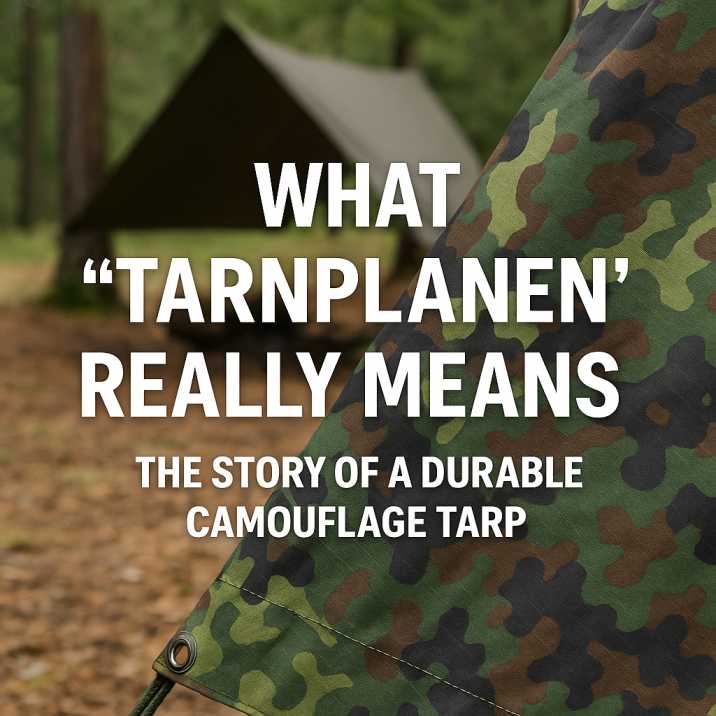
The word has German roots: tarnen (“to conceal”) and Planen (“tarps”). Put together, Tarnplanen is simply a camouflaged tarp designed to blend into natural surroundings. Its job is straightforward: offer cover, protection, and a bit of invisibility in environments where visual noise can cause problems.
While the digital world has tried to give the term more abstract meanings, some articles frame it as an “adaptive planning model,” the everyday use remains humble. It’s a tarp, but one designed with a purpose.
A Short, Quiet History
Camouflage isn’t a new idea. Long before synthetic fabrics and printed patterns, people were draping branches, mud, and canvas over whatever needed hiding, gear, food, or themselves. The version of camo tarps we now associate with Tarnplanen emerged more recently with the rise of lightweight polyester and PVC materials, along with printed woodland, desert, and urban patterns.
Unlike military tents or tactical uniforms, Tarnplanen never had a dramatic entry into history. It arrived quietly, adopted by campers, hunters, and anyone who needed a reliable cover that wouldn’t scream for attention.
How Tarnplanen Fits Into Everyday Life
For something so unassuming, Tarnplanen is surprisingly versatile. People use it for reasons that range from the purely practical to the deeply strategic.
Camping & Trekking:
A Tarnplanen can serve as a lean-to shelter, ground cover, or a protective roof during sudden rain. It’s quick to set up and fast to trust.
Hunting & Wildlife Watching:
The camouflage pattern isn’t just aesthetic; it helps users blend into the landscape rather than become part of the disruption to the scenery.
Construction & Urban Tasks:
In cities, a Tarnplanen works quietly as a cover for materials, goods, or equipment during transport. It blends in better than bright blue plastic.
Survival & Emergency Situations:
From creating shade in a heat wave to collecting rainwater, a good tarp has served as a first line of defense long before anyone called it high-tech gear.
Home & Garden:
It covers woodpiles, protects outdoor furniture, and shields plants from rough weather tasks that feel mundane but matter more than we admit.
The simplicity of Tarnplanen is part of its charm. You start using it for one reason and end up relying on it for ten others.
Why Tarnplanen Continues to Matter
The appeal of Tarnplanen comes down to a handful of qualities that never go out of style:
- It’s tough without being heavy.
- It bends without breaking.
- It protects gear better than most improvised options.
- And it blends into nature instead of distracting from it.
Made from polyester, nylon, or PVC, most Tarnplanen products are waterproof, UV-resistant, and reinforced along the edges. These details sound small, but they’re the difference between a tarp that lasts a season and one you keep for years.
The affordability also matters. You don’t need to spend much to buy something that silently earns its keep on every trip.
The Modern Landscape: More Than a Tarp?
Interestingly, the term Tarnplanen has begun to take on meaning beyond the gear world. Some urban planners and sustainability writers now use it metaphorically as a symbol of flexible planning that adjusts to changing conditions.
It’s not unusual for practical objects to inspire conceptual frameworks. Tents became shorthand for temporary housing. Nets inspired network theory. And now a camo tarp is being used to illustrate adaptable thinking in complex environments.
But strip away the metaphors and the product remains the same: a well-made, dependable sheet of protection.
The Challenges That Tarnplanen Users Face
Not everything about Tarnplanen is perfect. In fact, its most significant challenge is the lack of standardization. Because no single brand owns the term, quality can swing from excellent to flimsy.
A few issues buyers regularly face:
- Thin materials that tear easily
- Patterns that fade under prolonged sun exposure
- Stitching that doesn’t hold up against the wind
- Sellers exaggerating durability without specs.
- Little to no environmental accountability for PVC-heavy designs
The inconsistency means that two products labeled Tarnplanen might share the name but not the reliability. If the concept is to thrive, more transparent labeling and stronger material standards will be required.
What the Future Could Look Like
The next generation of Tarnplanen may be more innovative than its humble past suggests. Material science is already moving toward eco-friendly coatings, recycled polymers, and biodegradable waterproofing. Some companies are experimenting with heat-resistant layers, modular tarp systems, and bright patterns that adapt to different light environments.
In disaster-response settings, improved Tarnplanen-like materials could help create fast, sturdy shelters in areas where traditional tents fall short.
And as cities grow denser and climate conditions shift, lightweight, flexible coverings may become more essential than ever, protecting goods, people, plants, and even public spaces.
A Modest Tool With Lasting Purpose
In the end, Tarnplanen isn’t trying to be groundbreaking. It’s a tarp, a simple object that has earned a permanent place in outdoor culture because it does its job quietly and well. Its future might involve more innovative materials or bigger ideas. Still, its value will likely remain the same: to provide protection, blend into the background, and make life outdoors a little easier.
Sometimes the most dependable solutions are the ones that don’t call attention to themselves. Tarnplanen is precisely that kind of solution, steady, adaptable, and, more importantly than it looks, effective.